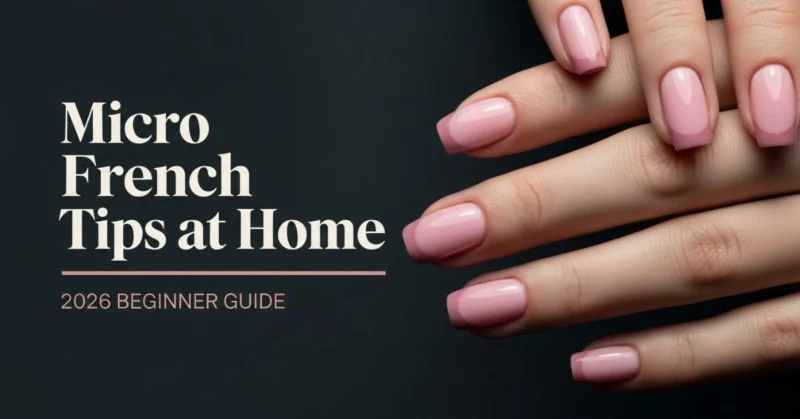
Tiny tips have taken over nail boards everywhere, and honestly, it makes sense. The micro french manicure strips away the thick white arch most of us grew up seeing and replaces it with a barely-there sliver of color right along the free edge. It looks expensive, precise, and surprisingly wearable on every nail shape.
This guide covers everything you need to get micro french tip nails at home without a nail tech or a salon appointment. You will learn the correct technique, which tools make the line easier to control, how to handle short nails, and a few color combinations worth trying in 2026. This is not a five-minute beginner project on your first try, but with the right setup and a little patience, it is completely doable.
What You Will Need?
- Sheer or skin-toned nail polish (base shade) – $4–$12 (drugstore or mid-range brand)
- White or off-white nail polish – $4–$10
- Nail striping tape – $3–$8 for a pack of multiple widths
- Thin detail brush or nail liner brush – $5–$15
- Clear gel top coat or regular top coat – $6–$18
- Base coat – $4–$12
- Cuticle pusher – $3–$8
- Nail file (180/240 grit) – $2–$6
- Acetone and a thin cleanup brush – $3–$6
- Gel-cure lamp (if using gel products) – $15–$40
Getting the Nail Plate Ready Before You Paint:
Prep is where most beginners lose the battle before they even start. A clean nail plate without any oils or residue is what allows the base coat to bond properly and keeps the tip line from lifting or bleeding.
Start by pushing back the cuticle line gently with a cuticle pusher. Avoid cutting unless you are comfortable with it; pushing back is enough to give you a clean working area. Lightly buff the surface of each nail with the fine side of your file, then wipe down every nail with acetone. This removes oil from the nail bed even if your hands feel clean.
Apply one thin layer of base coat and let it dry completely. This step protects the nail plate and gives your sheer shade something to grip. Skip it, and you will likely notice the color peeling from the edges within a day or two.
How to Do Micro French Tip Nails? The Core Technique
The defining characteristic of this look is the line width. A classic french tip covers roughly 20–30% of the nail; a micro version covers only 1–3mm along the free edge. That narrow margin is what makes the look so clean and modern.
Step 1: Apply Your Base Shade
Paint two coats of your sheer or beige base across the entire nail. The second coat goes on noticeably smoother once the first has set, so do not rush into it. Give each coat a full 60 seconds before adding the next; rushing this step causes streaks, especially with sheer formulas that show every imperfection.
Step 2: Place the Striping Tape
Once your base shade is fully dry, press a strip of nail striping tape horizontally across the nail, positioning it just above the free edge. The tape edge becomes the boundary for your tip line. Press it down firmly at the sidewalls, which are the edges along the sides of your nail, since lifting there is where the polish bleeds.
Step 3: Paint the Tip
Using a thin detail brush or the small brush in your polish bottle, apply your tip color in a single thin stroke across the exposed free edge. Keep the pressure light and consistent. One coat is usually enough for white or off-white shades; colored tips may need two very thin passes.
Remove the tape slowly and at a low angle while the polish is still slightly wet. Removing it after the polish has dried completely can pull the tip with it.
Micro French Tips on Short Nails:
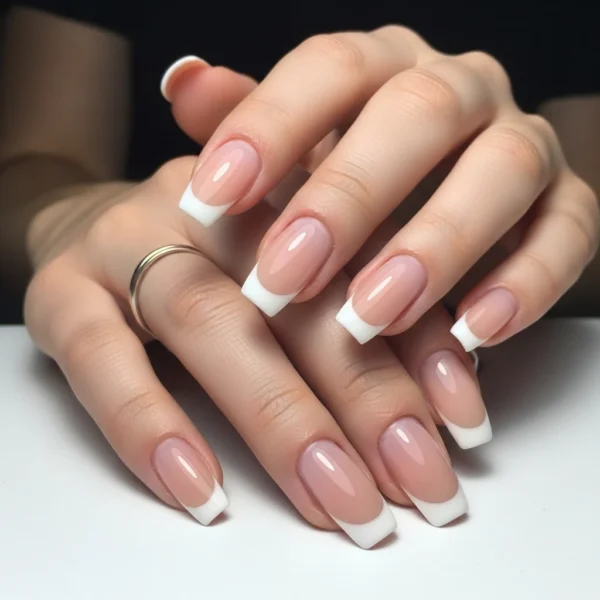
Short nails are actually ideal for this style. Because the tip line is so thin, it draws the eye to the length you do have rather than emphasizing what is missing. The technique stays the same, but a few small adjustments help.
On very short nails, skip the tape and work with a detail brush only. The tape can be awkward to position when there is minimal free edge to work with, and it may curve in a way that does not match your natural nail shape. A steady hand and a well-loaded thin brush give you better results here.
For almond or oval short nails, follow the natural curve of your free edge closely when placing the line. Going straight across on a curved nail creates a flat look that fights the shape. For square or squoval short nails, a straight horizontal line works perfectly.
A beige or natural base with a white micro tip on short nails reads as a clean, put-together look that works just as well in the office as it does on a night out.
Colored Micro French Tip Nail Ideas for 2026:
The neutral version is a classic, but one of the reasons this look has been everywhere on Pinterest this spring is how well it adapts to color. Nail techs have been calling soft pastel and tonal micro tips one of the defining looks of 2026, and it is easy to understand the appeal.
Tonal Combinations to Try:
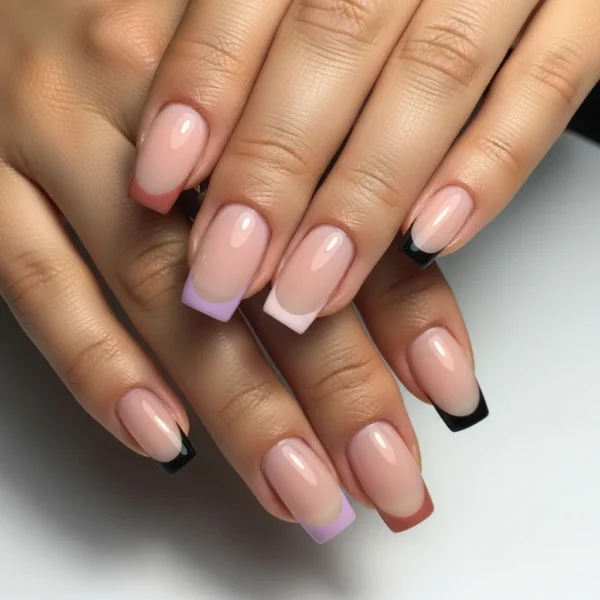
Soft pink base with a deeper rose tip is one of the most wearable options, especially on medium skin tones. The tip disappears into the nail rather than contrasting sharply, which gives a grown-out look that stays polished even after a week of wear.
Warm beige base with a caramel or terracotta tip has become a favorite for fall and transitional months. This feels more editorial than the classic white version without being too bold for everyday wear.
Pale lavender base with a muted lilac or dusty purple tip reads very current. This combination specifically has been gaining traction as an alternative to the traditional natural tone look.
For something with more contrast, a white or sheer base with a black micro tip creates a graphic, architectural effect that photographs well and holds up as a statement style.
Also Read: Polka Dot Nails Spring 2026: The Cutest Trend You’ll Want on Your Fingertips Right Now
Using Tape for Precise Micro French Lines:
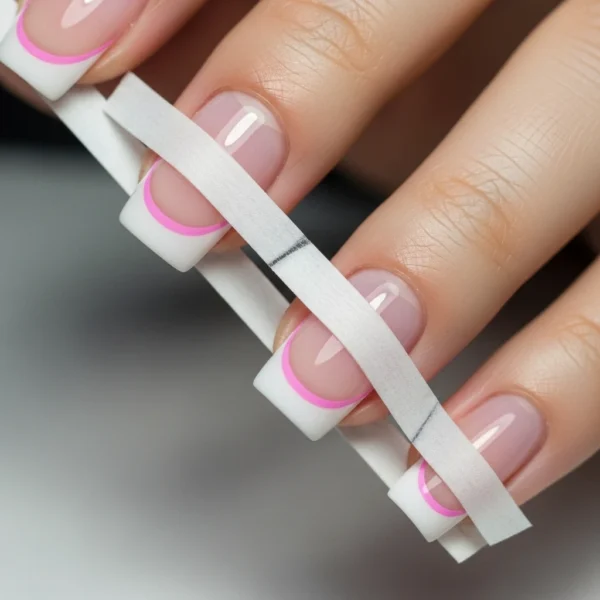
Nail striping tape is specifically designed for this application, and it is worth using over regular stationery tape. The adhesive is gentler, which means it lifts off without pulling the layers beneath it.
Choose the narrowest tape width in your pack. Wider tape reduces your working area and makes it harder to judge where your tip line actually lands. Position the tape along the natural smile line of your nail, keeping it parallel to the free edge. On a curved nail bed, you may need to curve the tape slightly rather than laying it perfectly straight.
One technique that works well for beginners is to use two pieces of tape, one on each side of the tip, to create a defined channel for the brush. This prevents the stroke from drifting above the line and keeps the width consistent across all ten nails.
After removing the tape, check the line under good lighting before applying top coat. Small gaps or uneven edges are easy to fix with the cleanup brush at this stage, but impossible to correct cleanly once the top coat is sealed over them.
Common Mistakes and How to Fix Them:
The tip line bleeds under the tape. This almost always happens because the base coat or base shade was not fully dry before the tape went down. The pressure of the tape disrupts a wet surface and creates a channel for the tip color to travel. Fix: always wait a minimum of ten minutes after your last base coat layer before placing tape. In humid conditions, wait longer.
The tip line is uneven or shaky. Unsteady hands are the usual cause, but so is a brush that is overloaded with polish. Too much product on the brush causes pooling and dragging. Fix: wipe the brush on the bottle neck to remove excess before each stroke. Work with less polish than you think you need.
The tip color is visible on the skin after cleanup. The acetone cleanup brush is dissolving more than just the stray polish. Fix: use a very fine, firm brush barely dampened with acetone, not saturated. Work in single precise strokes rather than scrubbing motions.
The top coat smears the tip line. Applying top coat too soon while the tip polish is still soft causes drag and smearing. Fix: wait at least five minutes after your final tip layer before sealing with top coat. Apply the top coat in one smooth pass rather than going back and forth over the same area.
Conclusion
Micro french tip nails at home require more patience than skill. The steps are not complicated, but the margin for error is small, which is exactly why prep and proper drying time matter so much. Once you have done it a few times, the technique becomes second nature.
Start with the classic sheer base and white tip to get comfortable with the line, then work your way toward the colored and tonal combinations that are making this style such a strong presence in 2026. Short nails, long nails, bare polish, or gel, this look is flexible enough to make your own.
Also Read: Cloud Dancer Nails 2026 – Pantone’s Color of the Year and How to Get the Look at Home
Frequently Asked Questions
1. Can I do micro french tip nails without striping tape?
Yes. Many people find that a thin detail brush and a steady hand give them better control than tape, especially on short or curved nails. Tape works well as a guide, but it is not required. Practice the freehand line on a nail wheel or on the back of your hand before going directly to your nails.
2. How thin should the micro french tip line actually be?
Aim for 1 to 3 millimeters. Anything wider starts moving toward a standard french tip. A good rule of thumb is that the line should be barely visible when your hand is held at arm’s length, but clearly defined up close.
3. How long does a micro french manicure last at home?
With regular polish and a quality top coat, expect five to seven days before tip wear becomes noticeable. Using a gel top coat sealed over regular polish extends that to around ten days. A full gel application with a gel-cure lamp can last two weeks or more.
4. Do colored micro french tips look good on all skin tones?
Yes, with the right color pairing. Deeper skin tones tend to look striking with terracotta, rust, and gold tips, while lighter skin tones work well with pastels and sheer whites. The tonal approach, where the base and tip are from the same color family, flatters every skin tone because it does not create harsh contrast.
5. What nail shapes work best for this style?
The micro french tip looks good on every shape, but it particularly suits short square, oval, and almond nails. On stiletto or coffin nails, the thin line can look proportionally small, so increasing the tip width slightly to around 3 to 4mm often reads better on longer lengths.

I’m Ava Thompson, a certified nail artist and beauty educator from Los Angeles, CA. After nearly a decade working at high-end salons, I became obsessed with helping women recreate salon-quality nails at home. I’ve personally tested hundreds of tools and polishes — drugstore and professional grade — so every tutorial I write is based on real experience, not just pretty pictures. My goal at Dhamaka Mirchi is simple: help you nail it on the first try, without spending a fortune.