Florals on nails have had their ups and downs, but daisy nail designs have quietly become the look that keeps coming back. Unlike overly fussy floral styles, daisies are graphic enough to look intentional and soft enough to feel feminine — a combination that’s genuinely hard to nail (no pun intended). Whether you’re doing your own nails at home or bringing a reference photo to your nail tech, this article walks you through the most wearable daisy nail art designs of 2026, complete with supply lists, step-by-step breakdowns, and honest notes on what trips people up. Some of these looks are beginner-friendly; others require a steady hand and a little patience. Expect to spend anywhere from 45 minutes to over an hour depending on your chosen style.
What You Will Need?
| Items | Price Range (USD) |
| Sheer or neutral base polish (drugstore brands work fine) | $4–$9 |
| White nail polish or white gel polish | $5–$12 |
| Yellow nail polish or nail art paint | $3–$8 |
| Thin nail art brush (size 000 or liner brush) | $4–$10 |
| Dotting tool (double-ended) | $3–$7 |
| Gel top coat (if using gel) | $8–$15 |
| UV or LED gel-cure lamp (for gel looks) | $15–$40 |
| Nail striping tape (optional, for geometric bases) | $2–$5 |
| Nail cleanser or 90%+ isopropyl alcohol | $2–$6 |
| Base coat | $4–$10 |
Simple Daisy Nail Art Designs for Beginners
Starting with five petals and a center dot sounds deceptively easy — and honestly, for one nail it is. The difficulty multiplies when you’re trying to keep the petals consistent across all ten fingers. That’s the honest truth of beginner daisy nail art.
The Classic Five-Petal Method
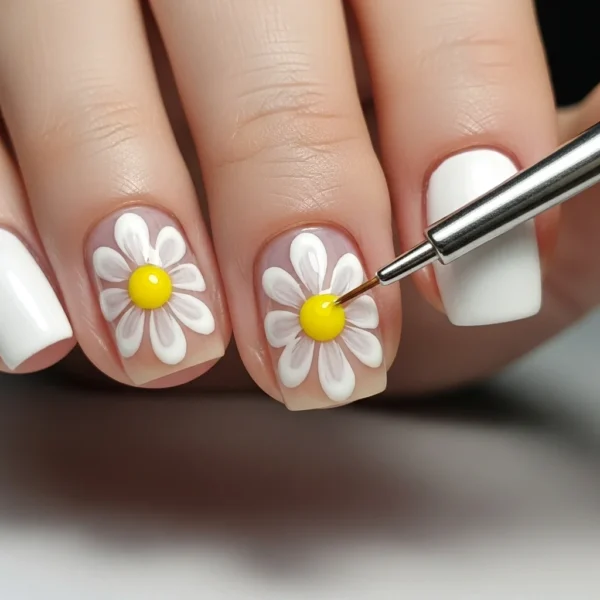
Apply your base coat and let it cure or dry completely. Then load a small amount of white nail paint onto your thin brush. Start each petal from the outer tip and pull inward toward the center of where the dot will sit. Think of it like drawing a tiny teardrop shape, with the wide end facing out. Five of these arranged in a circle, with small gaps between them, gives you a clean daisy outline.
The second coat of white goes on smoother and covers better — don’t skip it, especially over darker bases. Once the petals are set, use the small end of your dotting tool to place a yellow circle right in the center. Press gently and lift straight up rather than dragging the tool sideways, which smears the dot.
Paint the petals on every other nail first. Moving to the other hand while those dry prevents smudging and gives you a much cleaner result than rushing straight through.
Daisy Flower Nail Designs on Gel Polish
Gel polish changes the game for anyone who does their own nails regularly. The extended working time lets you position each petal before curing, which is a real advantage for more detailed daisy flower nail designs.
Gel Builder Technique for Raised Daisies
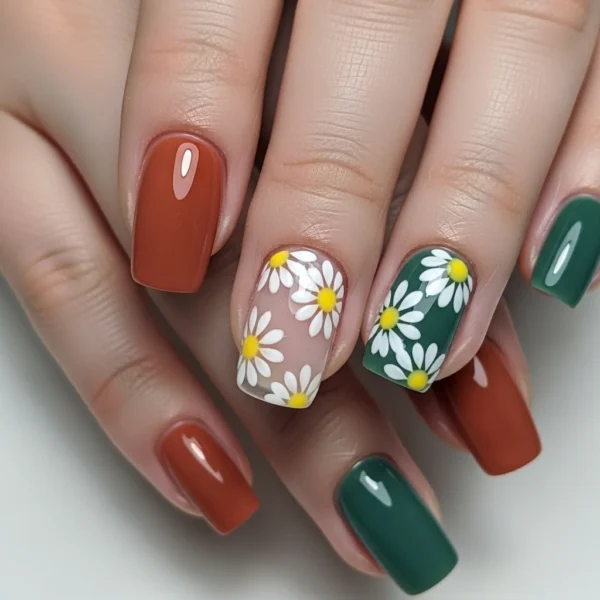
For a slightly dimensional look, you can use builder gel or a thicker nail art gel to slightly raise the petals off the nail plate. Apply a thin bead of white builder gel for each petal and cure between every two or three petals to avoid the design slipping. This takes patience, but the result catches light in a way that flat polish simply cannot.
For daisy nail design with gel polish on a colored base, go with jewel tones — deep terracotta, French blue, or sage green all make white daisies pop dramatically. Cure the colored base fully before starting any nail art on top. A partially cured base can cause the white petals to sink or bleed into the color.
Apply a thin layer of clear gel over your finished design before the final top coat. This smooths out any texture inconsistencies between the nail art and the base, giving the whole look a professional, salon-level finish.
White Daisy Nail Design on a Neutral Base
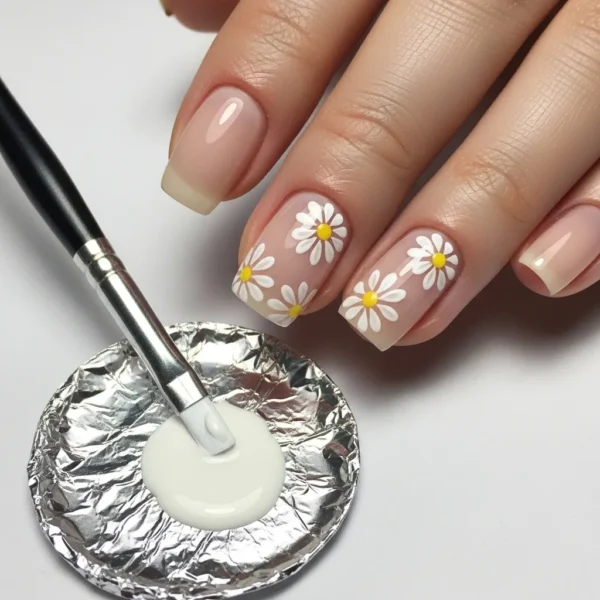
This is the combination that has been all over Pinterest this spring, and it’s easy to see why. A white daisy nail design on a beige, oat, or sheer natural base looks polished without trying too hard. The low contrast keeps it minimal; the detail of the daisy itself keeps it interesting.
Getting the Base Right
The base matters more than most people expect. A sheer skin-toned or soft beige base should be applied in thin layers — two or three coats of a sheer polish, or one careful coat of a more pigmented neutral. Thick application causes bubbling, which ruins the smooth surface you need for nail art on top.
Once the base is completely dry, transfer a small amount of white nail art paint onto a palette or piece of foil. Nail art paints are thinner than regular polish and give you far more control over petal shape. Work with a size 000 brush and keep the strokes light. Pressing too hard flattens the brush and makes petals look clumsy rather than delicate.
If your daisies look uneven between hands, try tracing a tiny pencil outline (using a non-toxic pencil) on a piece of paper first and copying that shape until your hand gets comfortable with the motion.
Also Read:Heart Nail Designs 2026: 25 Cute Ideas for Every Skill Level
Nail Art Daisy Design Variations Worth Trying in 2026
The standard white-on-neutral daisy has plenty of company this year. Nail techs have been calling maximalist floral arrangements the look of 2026, and daisies translate beautifully into several different variations.
Outlined Daisies with a Thin Black Border
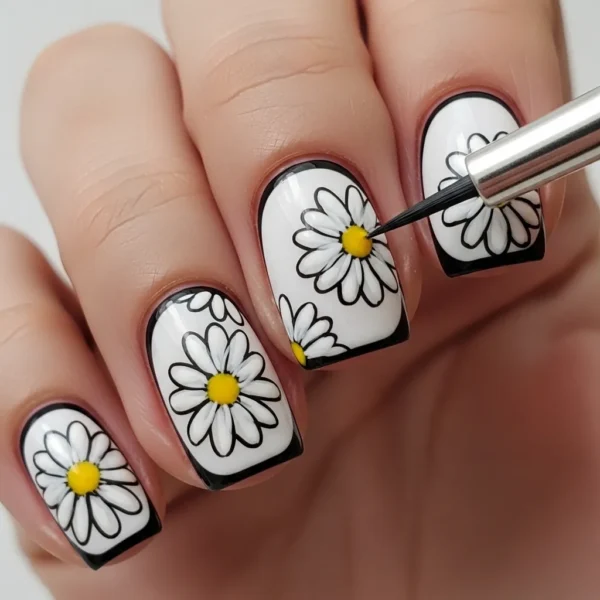
Drawing a fine black outline around each petal gives the design a graphic, almost editorial quality. Use a thin striping brush loaded with black nail art paint. Outline each petal individually after the white has dried fully — any tackiness will cause the black to drag and smear. This technique takes real steadiness, so expect the first attempt to be a learning experience.
Scattered Micro Daisies
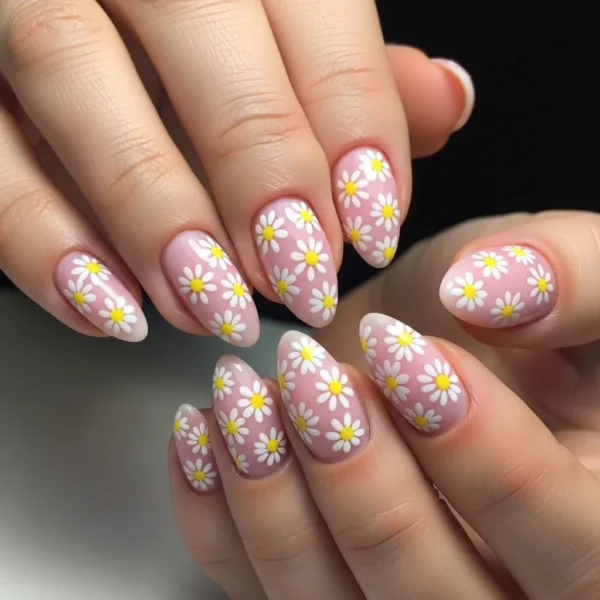
Instead of one large daisy per nail, place three or four tiny daisies of varying sizes across the nail bed. Smaller daisies require a size 000 brush and shorter, more controlled strokes. The result feels more organic than a single centered design and works especially well on longer nail shapes like almonds or ovals.
Daisy French Tips
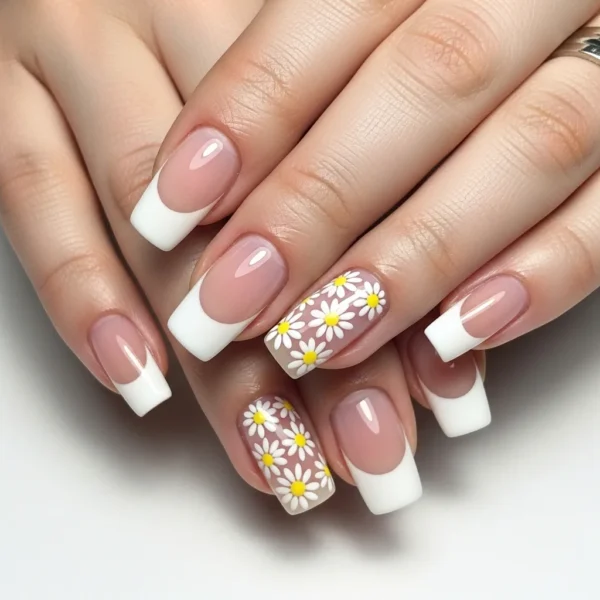
A French tip with a daisy painted along the free edge is one of the most wearable formats for anyone who prefers a subtler approach. Apply the French tip in white first, cure or dry it, then paint small daisy clusters sitting right along the smile line. This keeps the nail art contained and polished-looking rather than scattered.
Vary the size of daisies across an accent nail set. Larger daisies on the ring finger and thumb, smaller ones on the index and pinky, create a balanced asymmetry that looks intentional rather than mismatched.
Daisy Nail Designs for Short Nails
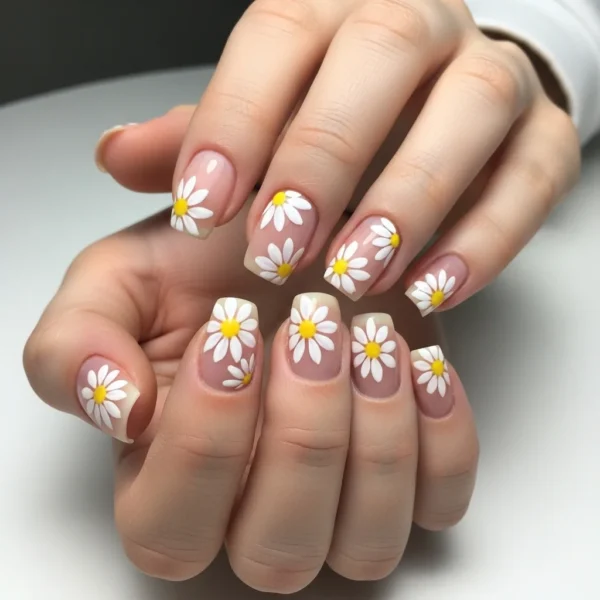
Short nails and floral designs have a reputation for looking crowded, but the fix is simpler than most people think: scale the design to the nail, not to an imaginary longer canvas.
On short nails, one daisy centered on the nail bed — or two small ones placed diagonally — works better than trying to fill the whole plate with art. The sidewalls of short nails are narrow, so keep all design elements within the central third of the nail width to avoid the design appearing to spill over the edges.
A single daisy with elongated petals can also make short nails look slightly longer by drawing the eye toward the tip. Paint the petals slightly narrower and extend them just past the halfway point of the nail. Pair this with a light natural base to keep the overall look airy.
On short nails, a matte top coat over the finished daisy design softens everything and prevents the nail art from looking too busy for the nail size.
Also Read: Matcha Nails Design Ideas April 2026: The Trendy Green You Need This Season
Common Mistakes and How to Fix Them
Petals that look uneven or lopsided: This almost always comes from inconsistent brush pressure. The brush width matters more than you’d think here — if your brush is too wide for the nail size, the petals will spread and flatten. Switch to a thinner brush and use lighter pressure throughout.
Yellow center dot that bleeds into the petals: This happens when the white petals underneath aren’t fully dry before you place the dot. Give the petals a full 60 seconds minimum after they look dry before touching them. With gel, cure the petals before applying the center.
Top coat that smears the design: This is one of the most frustrating things to have happen after careful work. It occurs when you apply top coat too soon, or press the brush down instead of floating it across the surface. Let nail art paint dry for at least two to three minutes, then apply top coat using very light, hovering strokes. For gel, a thin layer of clear gel before the final top coat prevents this entirely.
Daisies that look flat and lifeless: The fix is simple — add a tiny white highlight dot off-center on the yellow center, and a small shadow using a diluted gray tone on one side of the flower. These micro-details make the daisy look painted rather than stamped, and the difference is noticeable.
Wrapping Up
Daisy nail designs work for nearly every nail length, shape, and skill level — and the range of styles available in 2026 means there’s a version that fits whether you prefer something minimal or something bold. Starting with a simple centered daisy on a natural base is the most forgiving introduction to this style. From there, you can add outlines, scale up the size, experiment with color combinations, or try a scattered arrangement across all ten nails. The techniques here take practice, especially getting consistent petal shapes, but even early attempts tend to look charming. Give yourself a full hour, work slowly, and don’t rush the drying steps.
Frequently Asked Questions:
1. Can I do daisy nail designs without a nail art brush?
A thin bobby pin, a toothpick, or even the pointed end of a cuticle stick can substitute in a pinch. The result won’t be as clean as a proper liner brush, but for practice sessions or simple five-petal designs on shorter nails, these tools can produce surprisingly decent results. A dotting tool is still the best substitute for the center dot.
2. How long do gel daisy designs last before chipping?
With proper base coat, full curing at each step, and a sealed top coat over the free edge, gel daisy nail art typically lasts two to three weeks without chipping. The floral details are protected under the top coat layer, so they’re less vulnerable than exposed stamping designs.
3. What base colors work best under white daisy nail art designs?
Soft and medium-depth bases all work well. Light lavender, sage green, dusty blue, warm beige, and sheer natural tones are the most popular choices right now. Avoid very dark or neon bases for beginners, as the contrast makes petal imperfections more visible.
4. Is daisy nail design better done with gel or regular polish?
Gel offers more working time and a harder finish, which is useful for detailed nail art. Regular polish dries faster, which can be a disadvantage when placing petals. For beginners, regular nail art paint (not polish) is often the easiest to control because of its thin consistency and quick dry time.
5. Do I need a UV lamp for daisy nail designs?
Only if you’re using gel products. Regular nail polish and nail art paints air-dry without any lamp. If you’re doing a daisy nail design with gel polish, a UV or LED gel-cure lamp is necessary to set each layer properly.

I’m Ava Thompson, a certified nail artist and beauty educator from Los Angeles, CA. After nearly a decade working at high-end salons, I became obsessed with helping women recreate salon-quality nails at home. I’ve personally tested hundreds of tools and polishes — drugstore and professional grade — so every tutorial I write is based on real experience, not just pretty pictures. My goal at Dhamaka Mirchi is simple: help you nail it on the first try, without spending a fortune.