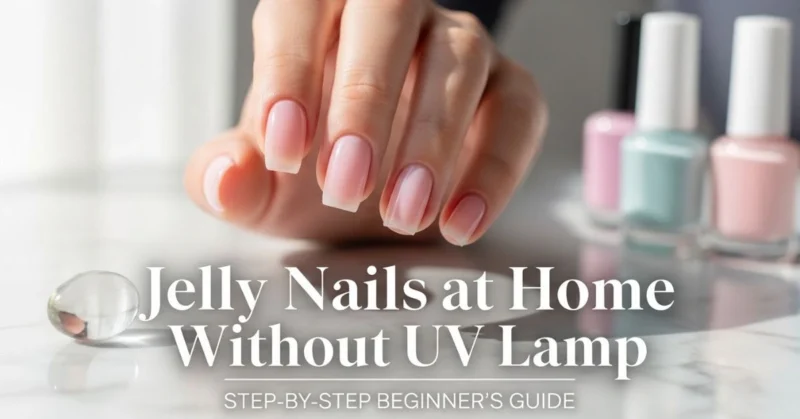
Getting that translucent, glass-like finish on your nails used to feel like something only a salon could pull off. The good news is that jelly nails at home without UV lamp are completely achievable using products you can find at any drugstore. No gel lamp, no professional training, no expensive equipment. This guide walks you through the exact process, from prep to final shine, using regular nail polish layering techniques. You will also learn how to get that coveted sheer, glazed look that has been trending hard on Pinterest and TikTok through early 2026. Fair warning: the technique is beginner-friendly, but the first attempt will not be perfect. Expect to get significantly better on your second try.
What You Will Need
- Sheer white, soft pink, or clear-tinted nail polish: look for polishes labeled “sheer” or “glass” ($3–$7 at most drugstores or beauty supply stores)
- High-shine clear top coat: a gel-effect top coat works best here ($4–$8; brands like Seche Vite or Sally Hansen Miracle Gel Top Coat are solid choices)
- Nail base coat: any standard base coat works ($3–$6)
- Nail buffer block: a 4-sided buffer for smoothing the nail plate ($2–$5)
- Cuticle pusher or orangewood stick: for clean cuticle prep ($1–$3)
- Rubbing alcohol or nail prep solution: to clean the nail plate before starting ($2–$4)
- Nail file, 180 grit: for shaping the free edge ($1–$3)
Step One: Prep Your Nails Properly
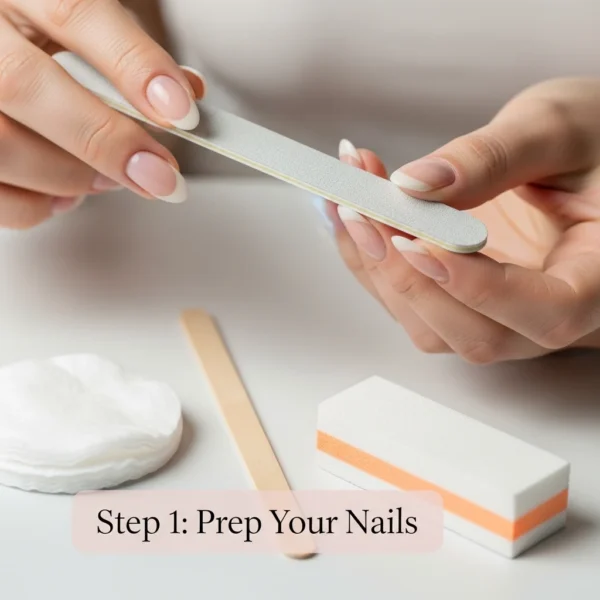
Prep is where most beginners skip too fast, and it shows in the final result. Jelly nails depend on smoothness – any ridges, oils, or peeling edges will disrupt the sheer, glassy finish you are going for.
Start by filing your nails to your preferred shape. A rounded or oval shape tends to complement the jelly nail look the most, though squoval works just as well. File in one direction only along the free edge to avoid splitting the nail plate.
Once shaped, use your buffer block to lightly smooth the surface of each nail. You are not trying to thin the nail down, just one or two gentle passes to remove any surface ridges. From there, push back your cuticles with the orangewood stick. Do not cut them unless you are experienced; simply push them back toward the base of the nail.
The final prep step is cleaning the nail plate with rubbing alcohol on a cotton pad. This removes any natural oils or lotion residue, which is critical. Polish grips to a clean, dry surface, skip this and you will get lifting within a day or two.
Pro Tip: Let your nails sit for 60 full seconds after the alcohol wipe before applying base coat. The alcohol needs to fully evaporate or it can cause bubbling in your first coat.
Step Two: Apply Your Base Coat
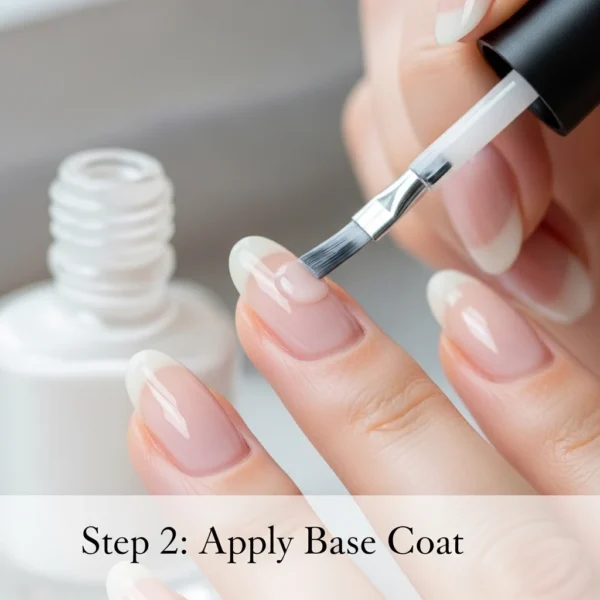
Base coat does more than protect your nails from staining. For jelly nails specifically, it creates an even surface for the sheer color layers to sit on. Thin, even application matters here.
Apply one coat of base coat, starting from just above the cuticle line and sweeping toward the free edge. Try to get close to the cuticle line without flooding it. One thing worth knowing: the brush width of your base coat matters here. A narrower brush gives you more control near the sidewalls, which is where most beginners accidentally flood the cuticle and get peeling.
Let the base coat dry for about 90 seconds before moving on. It should feel completely dry to the touch slightly tacky is not dry enough.
Pro Tip: Cap the free edge of your nail with the base coat brush. This means running the brush along the very tip of your nail. It seals the edge and extends wear significantly.
Step Three: Build the Jelly Color in Thin Layers
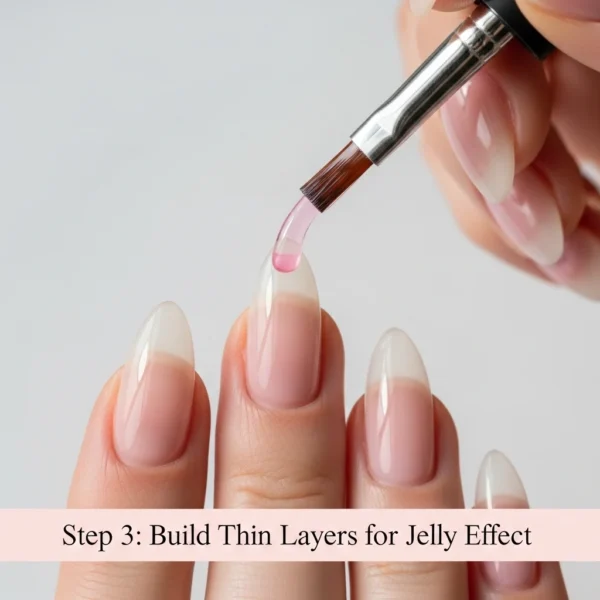
This is the core of the whole technique, and it is where the sheer nail polish glazed look DIY method really comes to life. The key principle is thin layers, fully dried, repeated. You cannot rush this.
Apply your first coat of sheer polish and expect it to look almost invisible. That is correct. Sheer polishes are designed to be buildable, which is exactly what creates the translucent jelly effect rather than a flat, opaque finish. One heavy coat will look streaky and uneven — that is not the look you want.
The second coat goes on noticeably smoother, and you will start to see the color build. Apply it the same way as the first: starting near the cuticle line, sweeping toward the free edge, then capping the tip.
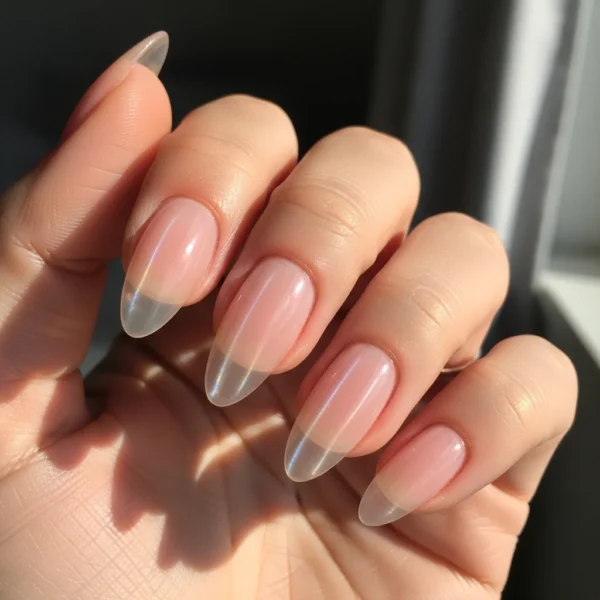
For a true jelly nail effect, three to four thin coats is the sweet spot. After four coats, the color should look sheer but saturated – almost like colored glass over your natural nail bed. Let each coat dry for at least two minutes before the next. Rushing this step causes streaks and dents.
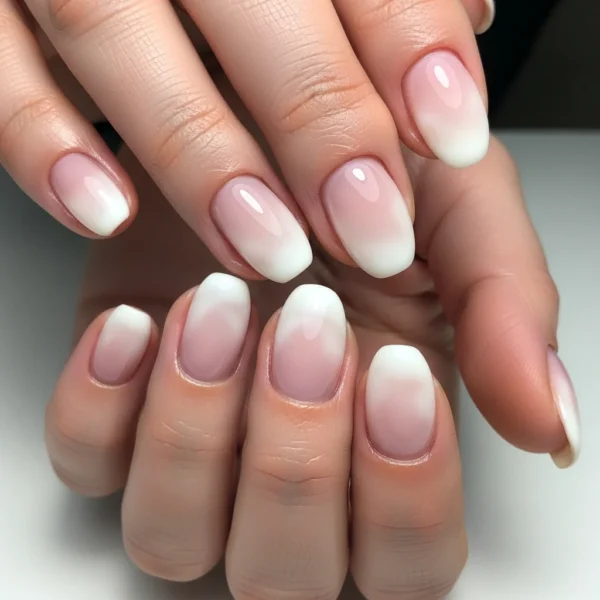
Pro Tip: For the soap nails DIY at home variation – which looks slightly more milky and soft – try a sheer white polish layered over a pale pink base. The combination mimics that soft, blurred finish that has been trending since late 2025.
Step Four: Apply the High-Shine Top Coat
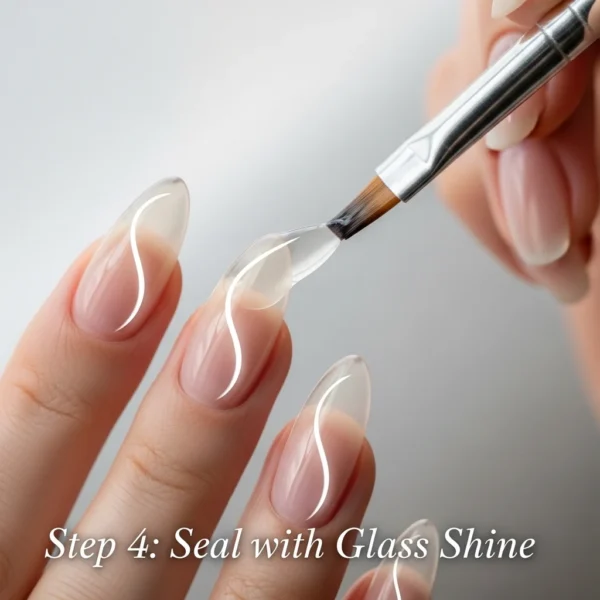
The top coat is what transforms a nice sheer manicure into a genuine glass nails no gel lamp result. A standard top coat will give you shine, but a gel-effect top coat will give you that thick, glassy dome that makes jelly nails look dimensional.
Apply the top coat in one smooth, even stroke per section of the nail. Do not go back over sections you have already coated, dragging the brush over a partially set top coat creates streaks and removes the glossy surface you are building. One coat is usually enough with gel-effect formulas, but if the nail still looks slightly flat after drying, a second coat a few hours later works well.
Cap the free edge again here, just as you did with the base coat. It makes a noticeable difference in how long the manicure lasts without chipping at the tips.
Pro Tip: Seche Vite dries to a hard, glassy finish in under two minutes and is one of the best options for this look at a budget price. The formula is self-leveling, which means minor brush strokes smooth out on their own.
Step Five: Finishing and Cleanup
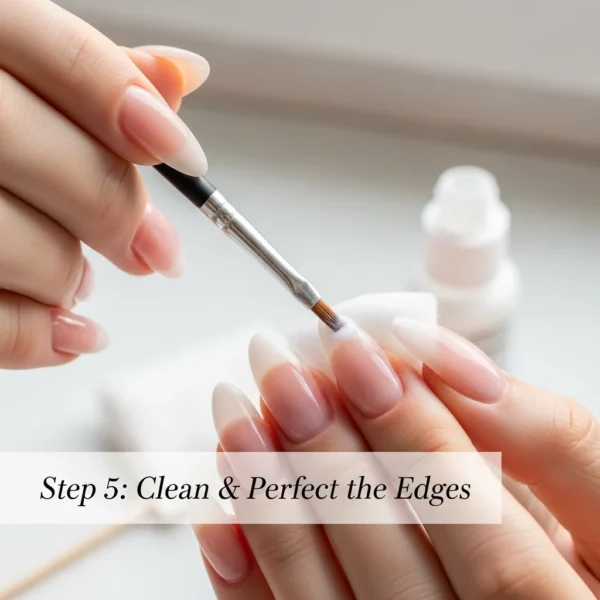
Once the top coat has set, give it at least five minutes before touching anything, do a quick cleanup pass around the cuticle line. Dip a fine-tip brush or a cotton swab in acetone and trace along any polish that has touched the skin. This step makes the manicure look clean and intentional rather than rushed.
Let the nails cure at room temperature for at least 30 minutes before doing anything that could dent or chip the surface. No dishes, no gym bags, no typing intensively. The polish is touch-dry quickly, but it takes time to harden fully.
This jelly nail tutorial beginner’s technique does not require any special lighting or equipment just patience with drying times and thin coats.
Pro Tip: Applying a thin layer of cuticle oil around the skin after cleanup does two things: it makes your cuticles look healthy and polished in photos, and it also helps any small bits of polish on the skin lift off cleanly.
Also Read: Easy Nail Art for Beginners at Home – Simple DIY Nail Designs Step by Step in 2026
Common Mistakes and How to Fix Them
Streaky or uneven color: This almost always comes from applying coats that are too thick or not waiting long enough between layers. Thick sheer polish does not self-level the way opaque polish can. Fix it by letting the current coat dry fully, then applying one more very thin coat over the top. In most cases, one additional thin layer smooths it out.
Bubbling under the polish: Bubbling happens when there is moisture, oil, or residual alcohol on the nail plate before application or when you shake your polish bottle instead of rolling it. Roll the bottle between your palms to mix the polish. Make sure your nails are fully dry and clean before starting. If you see bubbles in a coat, let it dry completely and apply a thin layer over the top before adding top coat.
Dull finish after top coat: This usually means the top coat was applied before the color coats were fully dry, or the brush was dragged back over an area that had already started setting. Unfortunately, the fix here is removing the top coat with a non-acetone remover and reapplying it cleanly. Going over a dull top coat with another layer rarely restores the gloss.
Polish flooding the cuticle: This is extremely common in beginners and happens when too much product is loaded onto the brush. Wipe one side of the brush on the bottle’s neck before applying. Start the stroke slightly above the cuticle line about a millimeter and let the polish flow naturally toward the skin rather than pressing it there. With practice, the gap closes naturally.
Wrapping Up
Jelly nails are one of the more accessible nail looks to recreate at home once you understand that the effect comes from layering and finish, not from special equipment. Clean prep, thin coats of a sheer polish, and a high-quality top coat are the three things that matter most. The technique does take a little patience — drying times are not optional — but the result is a clean, polished, glass-like manicure that holds up well through a week of regular use.
Frequently Asked Questions:
1. Can I really get jelly nails without a UV lamp or gel polish?
Yes. The jelly nail effect is about sheer, translucent color with high shine — not about the product type. Regular nail polish layered in thin coats with a gel-effect top coat replicates the look well. It will not be identical to a gel manicure, but the visual result is very close.
2. How many coats of sheer polish do I need for jelly nails?
Three to four thin coats is the standard for a true jelly effect. Two coats will look too sheer for most skin tones. Five or more coats can start to look thick and lose the translucent quality. Build slowly and check after each coat.
3. How long do jelly nails done at home last without gel?
With proper prep and a strong top coat, expect five to seven days before noticeable tip wear. Reapplying a thin layer of top coat every two to three days extends that significantly. They will not last as long as a gel manicure, but a well-prepped regular polish manicure holds up better than most people expect.
4. What colors work best for jelly nails?
Sheer pinks, milky whites, soft corals, and clear with a slight tint are the most popular. Deep sheer shades like a sheer burgundy or berry can also look stunning. The rule is that the polish needs to be sheer enough to let light through — if it goes fully opaque in two coats, it is not the right formula for this look.
5. Do I need any special products or can I use what I already have?
If you already have a sheer or tinted clear polish and a high-shine top coat, you have everything you need. The only upgrade worth making if you are starting from scratch is a gel-effect top coat — it makes a significant difference in the final gloss level compared to a standard drugstore top coat.

I’m Ava Thompson, a certified nail artist and beauty educator from Los Angeles, CA. After nearly a decade working at high-end salons, I became obsessed with helping women recreate salon-quality nails at home. I’ve personally tested hundreds of tools and polishes — drugstore and professional grade — so every tutorial I write is based on real experience, not just pretty pictures. My goal at Dhamaka Mirchi is simple: help you nail it on the first try, without spending a fortune.